


So I wake up this morning and am hanging out with the kids when my 4.5 year old daughter says about my 14 month old son, “Does Camden have a poo in his pants? Because his penis is big.”
LOL
That had nothing to do with anything here but I thought it hilarious so thought I’d share.
We can move on now…
Hip extension occurs with every step you take and more so when you run or power walk, if that’s your jam.

The problem that many run into is that whenever their hip extends, the pelvis and lumbar spine go with it into anterior tilt and extension, respectively.
While this can go unnoticed for a long time, it’s an associated M/AP that can lead to problems down the road just like having a job that has you typing a lot every day can eventually result in carpal tunnel syndrome – it’s not the very first keystroke that caused the damage but the accumulation over time.
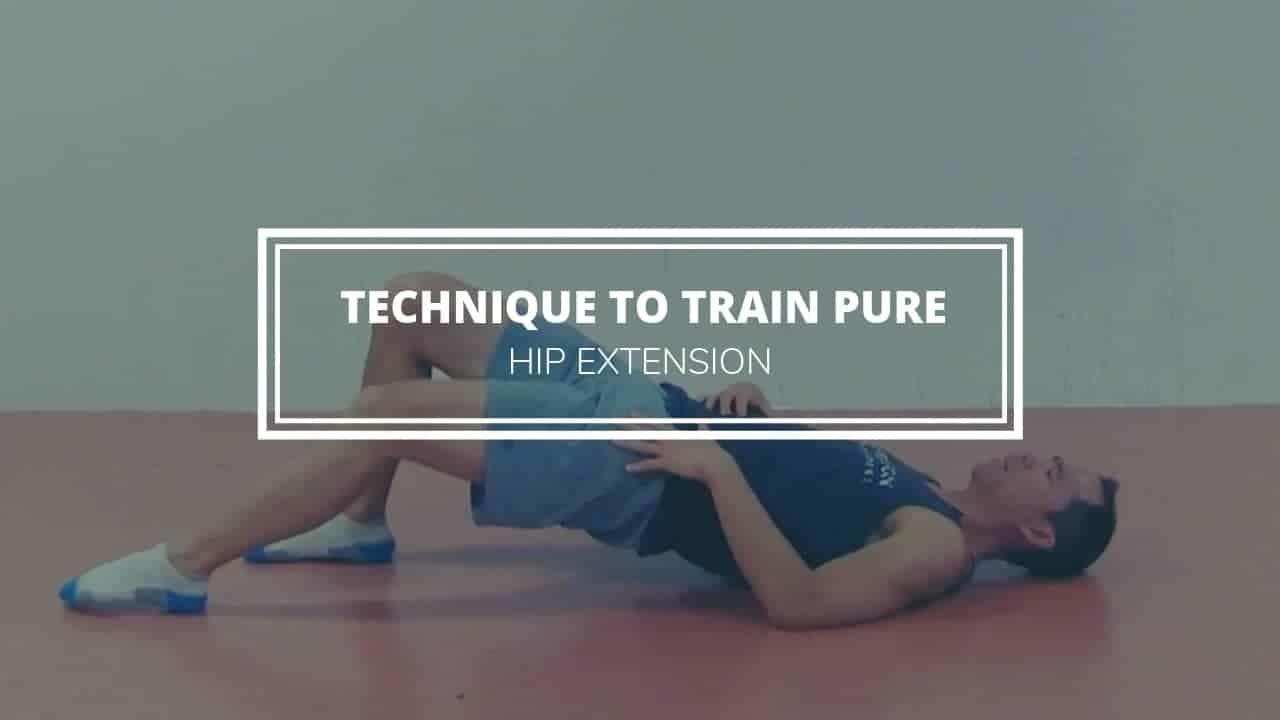
Here’s a little drill that you can do to reprogram pure hip extension, which is extension of the hip without associated anterior pelvic tilt or lumbar extension:
Whenever I prescribe exercises designed for re-programming the neuromuscular system vs. building strength or endurance, I suggest high frequency of stimulus i.e. DAILY training with at least 2-3 sets.
For this technique, perform anywhere from 5-10 reps per side.
Restoring this important range that we use daily will go a long way to keeping your lumbar spine in good health.
And if you’ve already got extension-related low back pain, this drill is absolutely CRITICAL to keeping your symptoms at bay.
Extension dysfunction is 1 of 3 common classifications of low back pain that indicates the type of movement or forces that tend to cause low back pain.
If standing, walking or running cause low back pain, there’s a good chance you’ve got Extension Dysfunction and need to re-program your body to move without putting your lumbar spine into extension.
For a comprehensive program teaching you exactly that, check out the Spine Control course.