
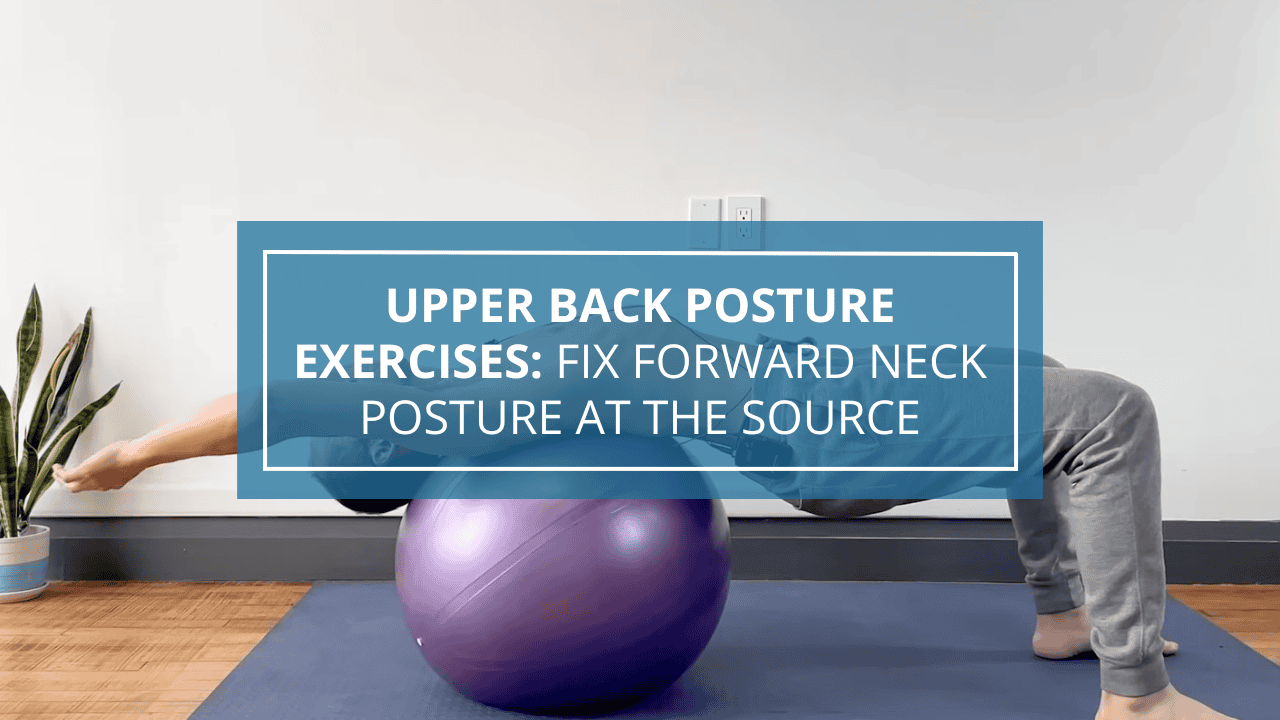
If you’ve got forward head, neck, or upper back posture issues, you might be surprised that where you should focus most of your efforts is not your neck.
I know that sounds strange. After all, when you look at forward head posture, it seems obvious that the problem is the head and neck position. The head sits forward, the chin moves out, and many people immediately think, “I need to stretch my neck. I need to do more chin tucks.”
And while working on your neck can certainly be useful, there’s another important piece of the puzzle that many people miss: your upper back.
Your thoracic spine — the middle portion of your spine — plays a major role in how your head and neck position themselves. When your upper back becomes stiff and rounded from phones, computers, driving, and stress, your neck often has to adapt.
This is why many people try to fix bad posture in their neck but don’t get the results they want.
The better approach is to look at the entire system. By improving thoracic mobility and training the muscles that support your spine, you can build a better foundation for your neck.
In this article, I’ll show you two simple upper back posture exercises using a stability ball that target both thoracic mobility and deep spinal muscle activation.
Why This Happens: The Connection Between Your Upper Back and Forward Head Posture
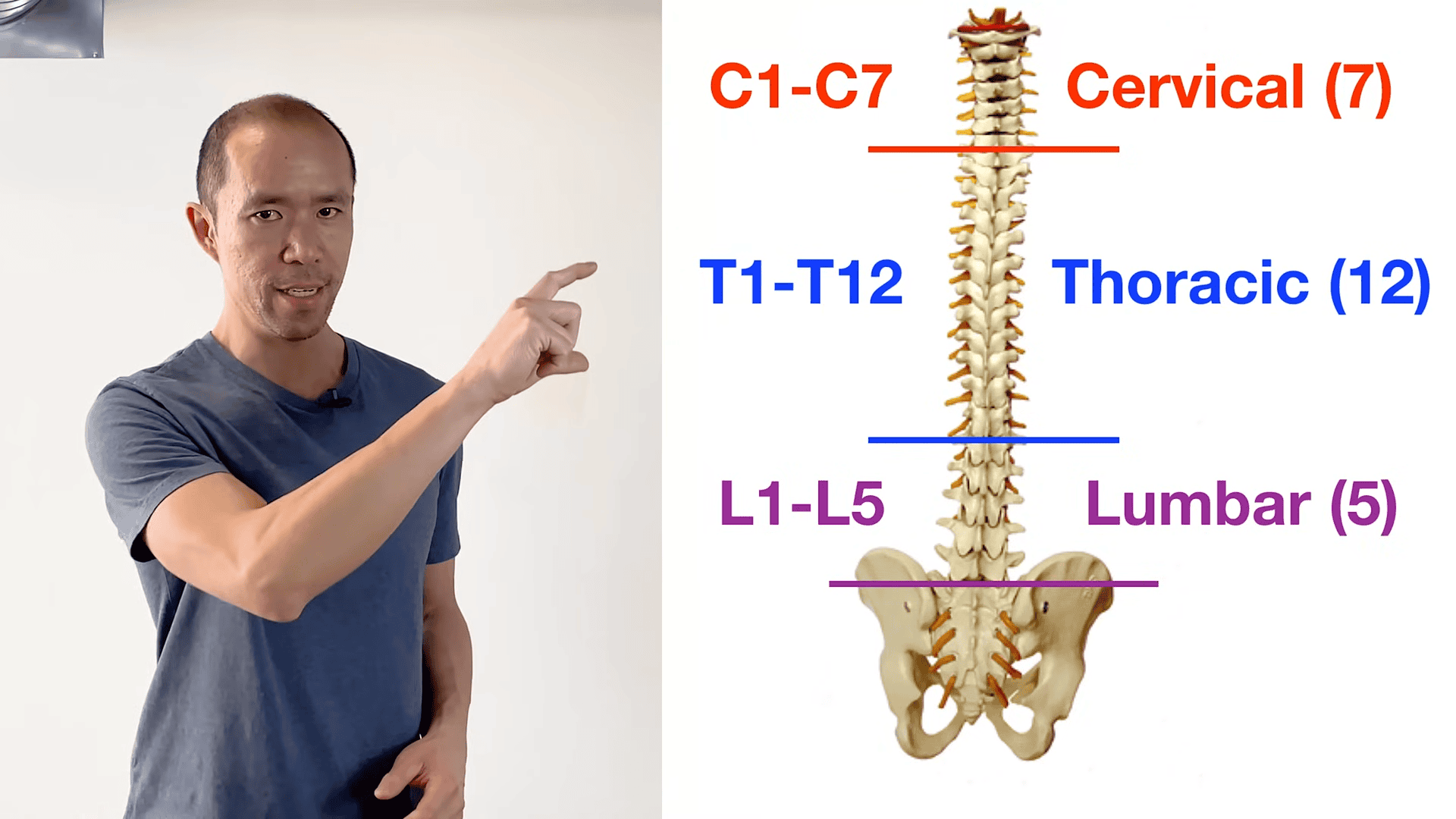
Your spine is not one single structure working independently. The different regions of your spine influence each other.
At the top, you have your cervical spine — your neck.
In the middle, you have your thoracic spine — your upper and mid-back.
At the bottom, you have your lumbar spine — your low back.
When you look at someone with forward head posture, it’s easy to assume the neck is the main problem. The head is forward, so people naturally think, “I need to stretch my neck” or “I need to do more chin tuck exercises.”
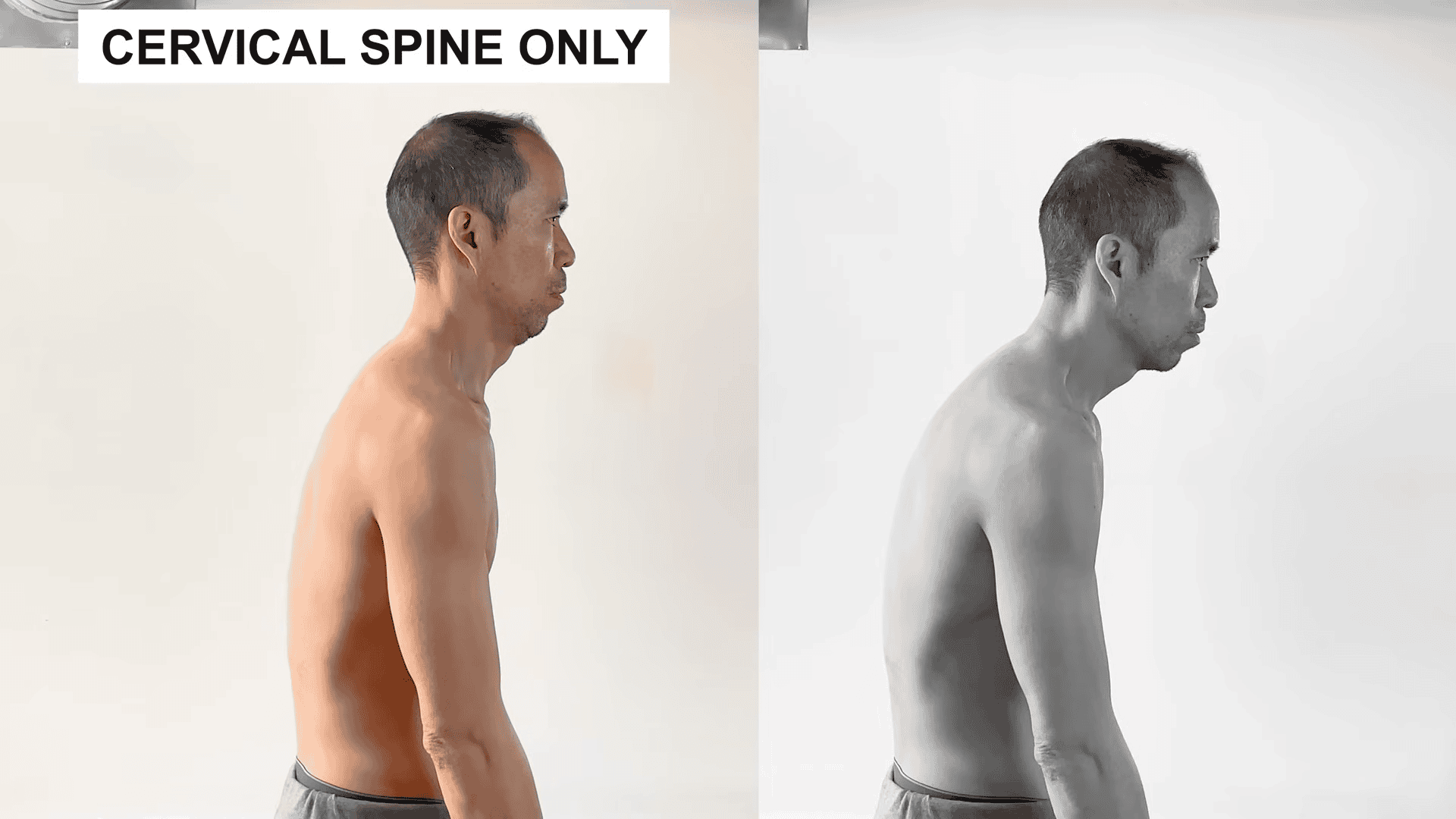
And while those exercises can certainly be useful, the position of your thoracic spine plays a major role.
If your upper back is rounded and your thoracic spine is not extending well, your neck has to adapt to keep your head and eyes positioned properly.
That’s why when I compare correcting forward head posture by only focusing on the cervical spine versus improving the thoracic spine, the thoracic spine approach often creates a bigger visual change.
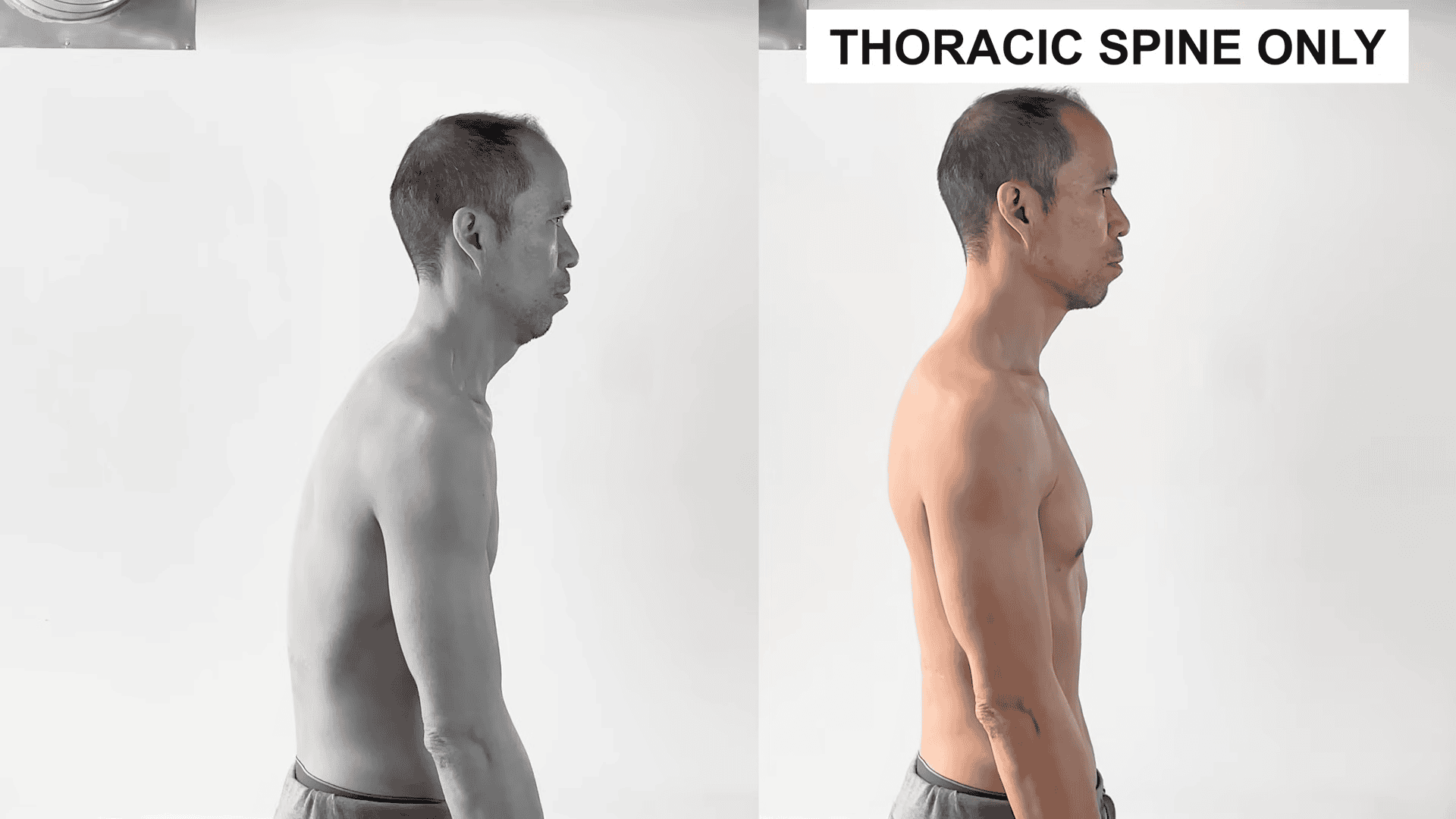
The neck sits on top of the upper back, so improving your thoracic spine position can have a significant impact on how your head and neck are positioned.
Research supports focusing on the thoracic spine
We actually have research that supports this approach.
The study “Upper thoracic spine mobilization and mobility exercise versus upper cervical spine mobilization and stabilization exercise in individuals with forward head posture” compared two groups.
One group focused on the cervical spine, while the other focused on upper thoracic spine mobility.
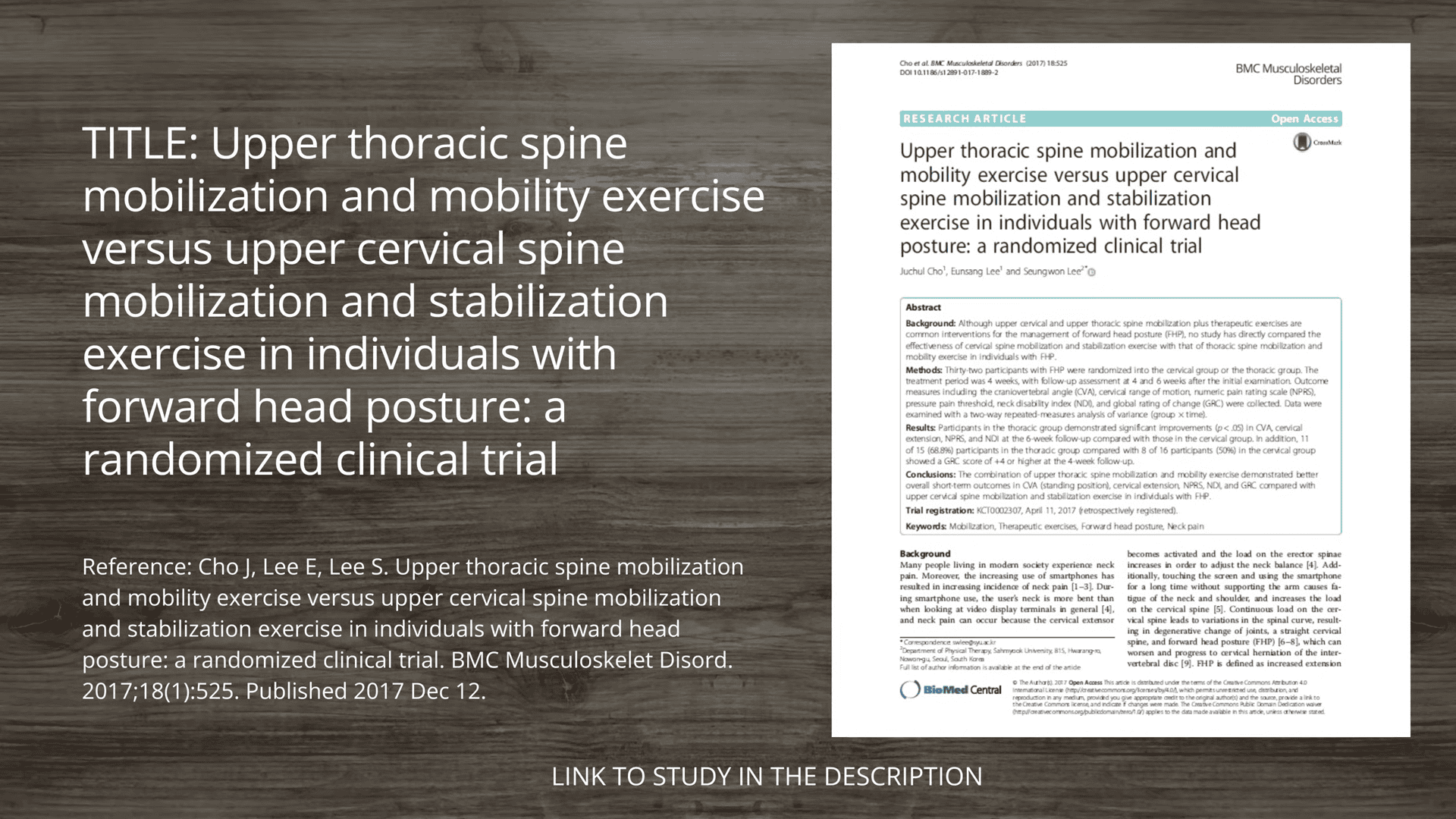
The researchers found that the combination of upper thoracic spine mobilization and mobility exercise demonstrated better short-term outcomes in craniovertebral angle and cervical extension — two measures related to forward head posture [1].
In simple terms, the researchers found that working on the upper back produced better short-term changes in these posture-related measurements than only focusing on the neck.
That doesn’t mean your neck is unimportant. Your cervical spine still matters.
The best approach is to address both, but if you’re only focusing on your neck and ignoring your thoracic spine, you may be missing an important part of the picture.
The Role of the Multifidus in Upper Back Posture
Another important piece of the puzzle is a group of small muscles along your spine called the multifidus.
The multifidus muscles are deep spinal stabilizers. They help control movement between individual vertebrae and contribute to spinal stability.
When these muscles are not doing their job effectively, larger muscles often try to take over.
One example is the long erector spinae muscles — the larger muscles that run along your spine. These muscles are great for producing movement, but they are not designed to replace the precise stabilizing role of the deeper spinal muscles.
This can create a compensation pattern.
The bigger muscles become overactive, while the deeper stabilizers don’t contribute as effectively.
That’s one reason why I’m very particular about the technique in the exercises I’m going to show you.
The goal isn’t just to move your spine.
The goal is to put your body in a position where we can reduce compensation and make it easier to activate the muscles that actually support good posture.
That’s where these upper back posture exercises come in.
How to Fix the Root Cause of Poor Upper Back Posture
When people ask me how to fix bad posture in the neck, they’re usually looking for a quick stretch or one magic exercise.
But posture is not just about flexibility.
It’s about mobility, strength, coordination, and your ability to control your body in different positions.
For this routine, we’re going to focus on two main goals:
First, we’ll improve thoracic spine extension. This helps counter the rounded upper back position that many people develop from sitting, computers, and phones.
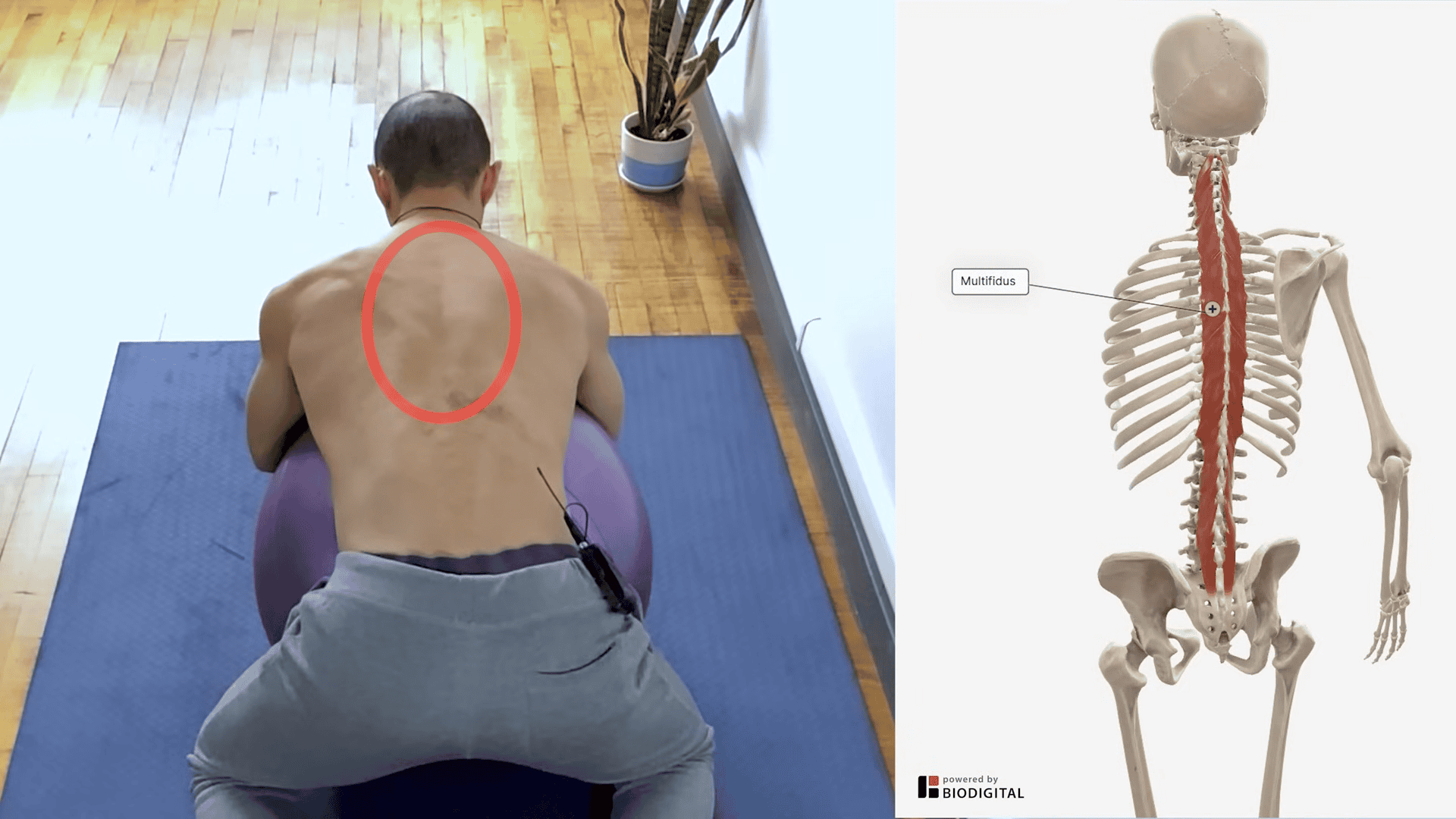
Second, we’ll train the deep muscles around the spine, especially the thoracic multifidus, so your body has better support for maintaining a more efficient posture.
The exercises use a stability ball because it allows us to create positions that are difficult to achieve on the floor. The ball supports your body while allowing your spine to move through extension and helps us target specific muscles with more precision.
Remember, quality matters more than forcing a bigger range of motion.
You’re not trying to crank your spine backward.
You’re trying to teach your body a better position.
Next, I’ll show you the two exercises that make up this simple routine.
Exercise 1: SB Snow Angels
The first exercise is the Stability Ball Snow Angel.
This movement focuses on getting your thoracic spine — your upper back — into extension while opening up your chest.
When we spend a lot of time sitting, using phones, or working at computers, our upper back can become more rounded. Because your neck sits on top of your upper back, improving the position and movement of your thoracic spine can help create a better foundation for your head and neck.
The goal is not to force your neck backward. Instead, use the ball to support your spine while you gently move through thoracic extension.
As you perform this exercise, take big deep breaths. Expand your lungs and open your chest up.
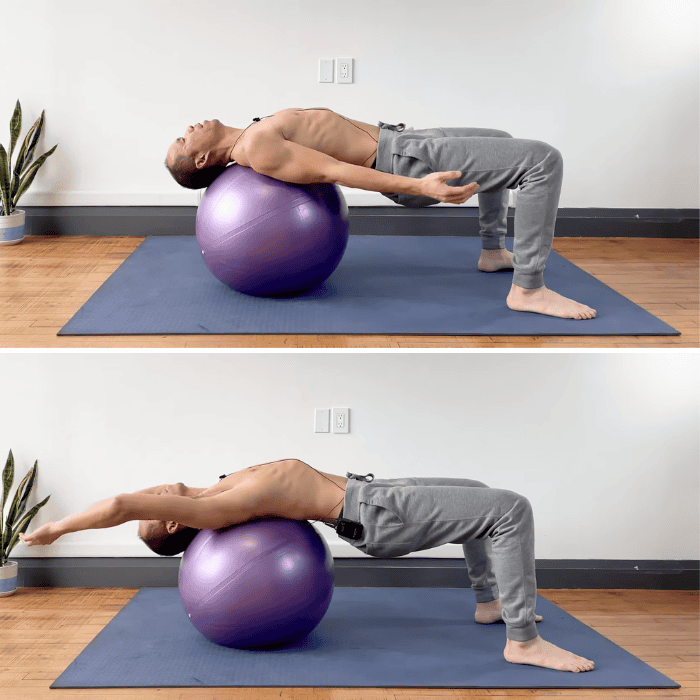
- Sit on a stability ball with your feet firmly planted on the floor.
- Roll backward until your head, shoulders, and neck are supported by the ball.
- Push yourself back slightly so your upper back and thoracic spine are extended over the ball.
- Move your arms like you’re making snow angels.
- Take big deep breaths and focus on expanding your lungs.
- Rock slightly or adjust your position to explore different areas of thoracic extension.
- Perform about 15 repetitions.
Exercise Benefits
- Improves thoracic spine extension.
- Helps address rounded upper back posture.
- Opens the chest while encouraging big deep breaths.
- Supports better forward neck posture by improving the position of the upper back.
Exercise 2: SB Thoracic Extensions
This is where the magic happens.
This exercise focuses on activating the thoracic multifidus — deep muscles around your spine that help support posture.
The reason I’m so particular about the setup is because the details matter.
We start by hugging the ball with your legs. This puts your pelvis into posterior pelvic tilt and your lumbar spine into flexion.
The reason for this is that the larger erector spinae muscles, which often compensate when the multifidus muscles are not contributing effectively, are reduced in this position.
Your starting position should be:
Everything is flexed. You’re rounded except your eyes are looking up.
Then, as you lift your chest off the ball, you look down toward the floor and slightly toward the ball.
This dissociation helps reduce the contribution of the short cervical extensor muscles while encouraging activation through the thoracic spine.
The goal is to focus on the deep muscles right around your spine to lift you up.
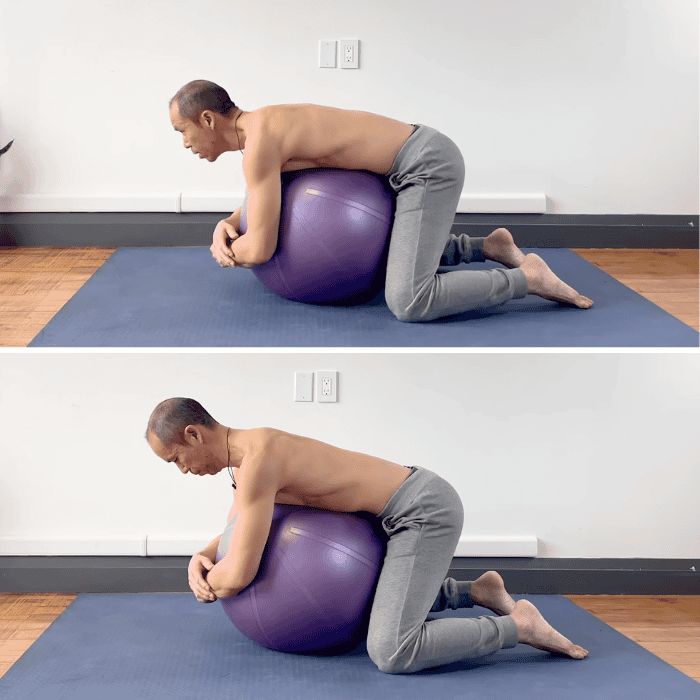
- Hug the stability ball with your knees to create a posterior pelvic tilt.
- Allow your low back to round into lumbar flexion.
- Start with your chest toward the ball and your eyes looking up.
- Lift your arms off the floor.
- Lift your chest off the ball as you look down toward the floor and slightly toward the ball.
- Focus on the deep muscles right around your spine to lift you up.
- Hold for 10 seconds while breathing naturally.
- Slowly control your descent back down to the ball.
- Repeat in different areas along your thoracic spine, starting with 2 reps and progressing toward 4 reps per area.
Exercise Benefits
- Helps activate the thoracic multifidus and other muscles around the spine.
- Helps reduce compensation from larger spinal muscles.
- Improves upper back control and stability.
- Targets the deep muscles needed to support better upper back posture exercises.
Why These Exercises Actually Work
The reason these exercises work is because they address two important parts of posture: mobility and muscle activation.
A lot of people with forward head posture focus only on pulling the head backward. But your neck does not work in isolation.
Your cervical spine sits on top of your thoracic spine.
If your upper back is rounded and not moving well, your neck has to adapt.
The stability ball snow angels help improve thoracic extension.
The stability ball thoracic extensions help target the deep muscles around the thoracic spine while reducing compensation from larger muscles.
Instead of only trying to force your neck into a different position, you’re improving the foundation underneath it.
That’s the key difference.
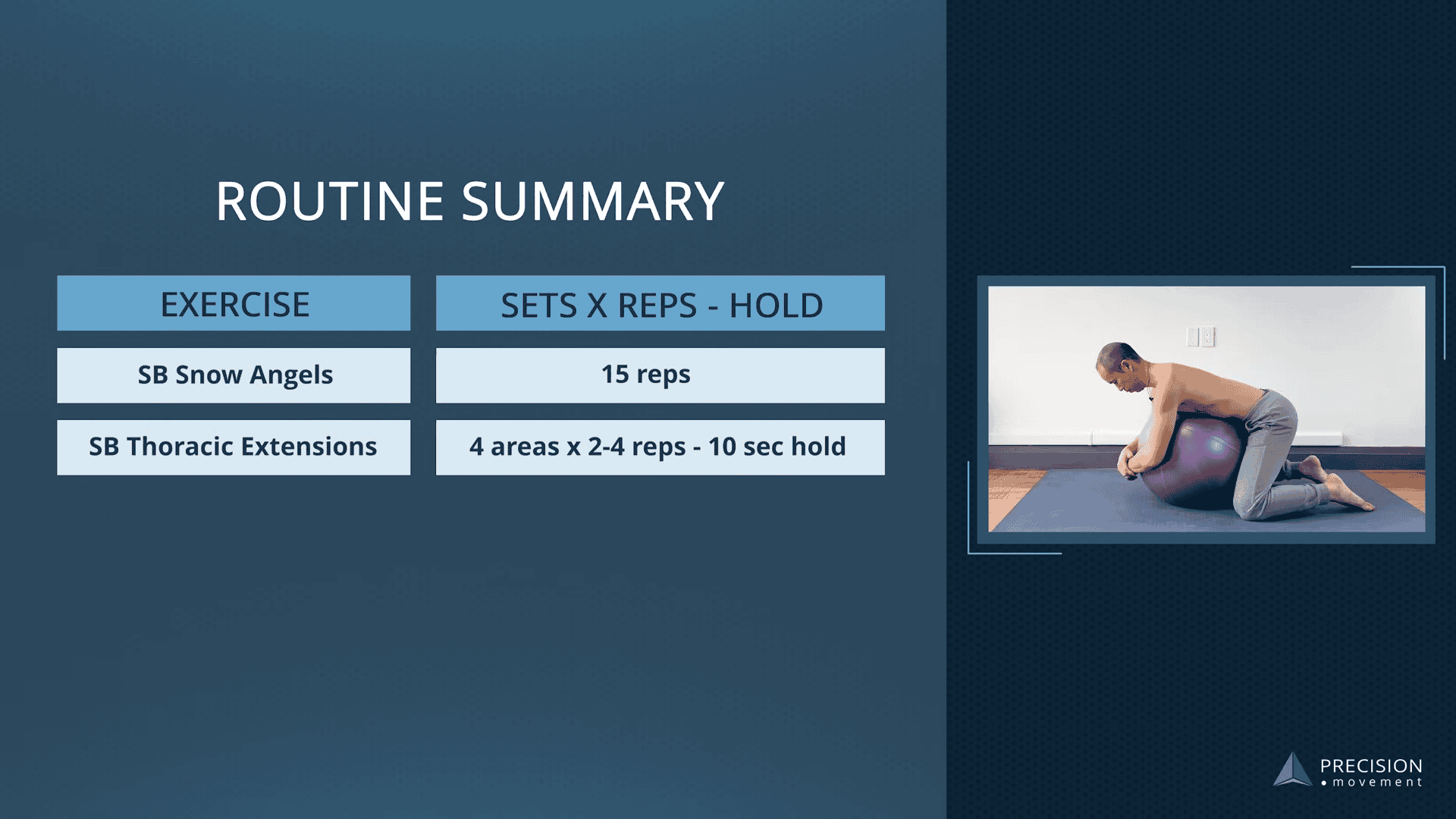
Upper Back Posture Exercises Routine Summary
For improving upper back posture and forward neck posture, perform this routine consistently.
Daily routine:
- Stability Ball Snow Angels
- 15 repetitions
- Focus on deep breathing and opening the chest
- Move slowly and explore thoracic extension
- Stability Ball Thoracic Extensions
- Start with 2 repetitions in each thoracic area
- Hold each repetition for 10 seconds
- Progress toward 4 repetitions in each area
- Breathe naturally throughout the movement
Total time: approximately 5 minutes.
Perform this routine daily for about four weeks.
Because posture is something we reinforce every day, frequent practice is important. By consistently training these movements, you’re giving your body repeated opportunities to develop better mobility, control, and support.
Next Steps
These exercises are a great starting point if you want to improve upper back posture exercises and address forward head posture.
But posture is just one piece of moving well.
The body works as a connected system, and improving your mobility, strength, and movement habits over time is what creates lasting change.
That’s why I created the free ROM Coach app. It’s designed to help you move freely and without pain by giving you structured programs and exercises that target the areas where people commonly lose mobility.
If you want a guided approach instead of guessing what exercises to do, check it out and start building better movement habits today.
Key Takeaways
- Forward head posture is often influenced by your upper back, not just your neck.
- Improving thoracic spine mobility can help support better neck positioning.
- Upper back posture exercises should focus on both mobility and muscle activation.
- Stability ball snow angels help improve thoracic extension and open the chest.
- Stability ball thoracic extensions target deep spinal muscles like the thoracic multifidus.
- Precision cues matter — quality movement is more important than forcing range.
- Consistency is key: practice these exercises daily for several weeks to build better posture habits.
References
[1] Cho, J., Lee, E., & Lee, S. (2017). Upper thoracic spine mobilization and mobility exercise versus upper cervical spine mobilization and stabilization exercise in individuals with forward head posture: a randomized clinical trial. BMC musculoskeletal disorders, 18(1), 525.
https://pmc.ncbi.nlm.nih.gov/articles/PMC5727966/