


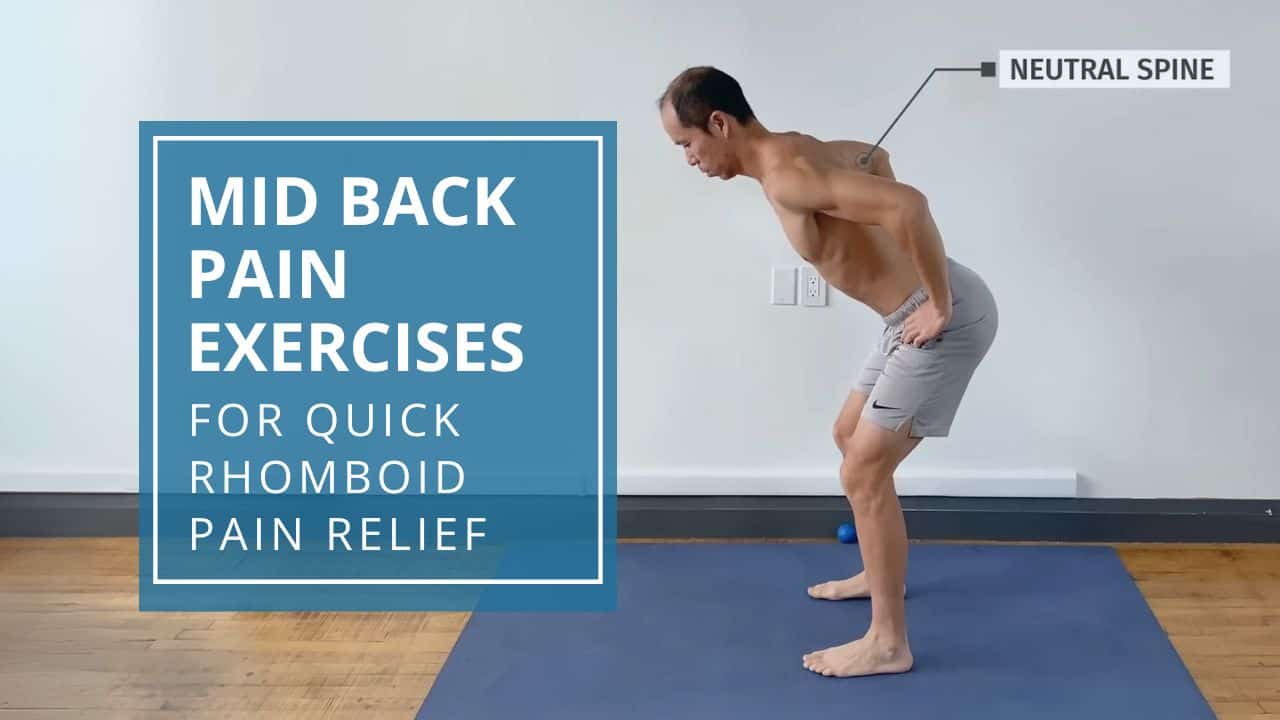
If you’ve ever felt that nagging soreness right between your shoulder blades, you know how distracting it can be. That middle back discomfort – often caused by tight mid back muscles or sore rhomboid muscles – can make everyday activities like typing, driving, or even standing uncomfortable.
The good news is that with a few targeted mid back pain exercises, you can reduce discomfort in just a few minutes. For guided instruction, download the ROM Coach app and try the Rhomboid “Movement Painkiller,” which makes these exercises easy to follow.
Why Your Mid Back Gets Sore
Pain in the middle of your back is usually related to the rhomboid muscles, which run from your spine to your shoulder blades. These muscles are responsible for retracting your shoulder blades and supporting good posture.
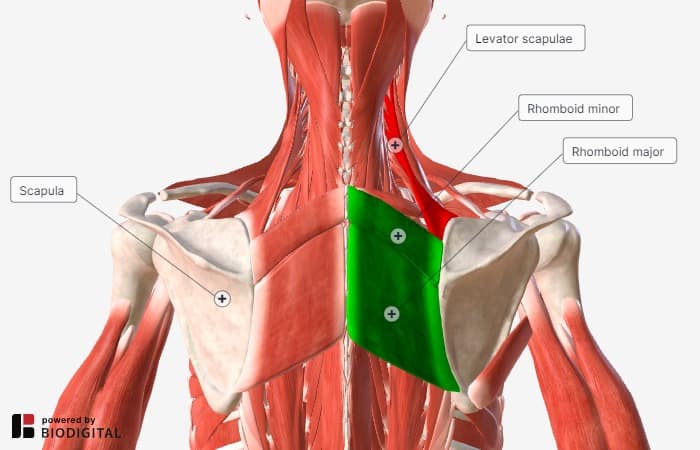 When they become tight – often due to long hours at a desk, hunching over a phone, or repetitive movements – they can lead to sore mid back pain and tension across your upper back.
The surrounding upper back muscles, including parts of the trapezius and the erector spinae, work alongside the rhomboids to stabilize your shoulders and spine. If your rhomboids are weak or tight, other muscles compensate, leading to middle back discomfort.
Targeted exercises can help restore mobility and reduce pain. Many people also notice tension radiating into the shoulders and neck. Pairing these exercises with techniques to release tight shoulders can enhance your relief and improve overall upper back function.
Exercise 1: ASMR Rhomboids
The first step is all about releasing tension in the rhomboid muscles. This technique gently presses into tight spots, improving circulation and promoting relaxation in the muscles that stabilize your shoulder blades. [1]
To do this, place a small massage ball under your rhomboid – just beside the shoulder blade – and lie on top of it. Relax your body and breathe deeply. Once comfortable, perform three large arm circles in one direction, then switch and do three circles in the opposite direction. Slightly adjust the ball to target different areas along the rhomboid and repeat the pattern.
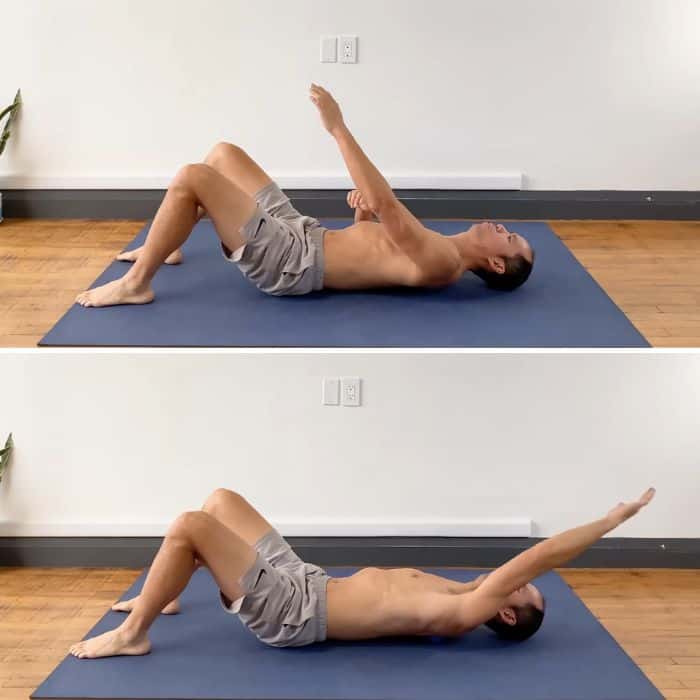
- Place a massage ball, tennis ball, golf ball, or rolled-up sock under your rhomboid.
- Lie so the rhomboid rests on the ball.
- Relax and breathe naturally.
- Perform 3 large arm circles in one direction.
- Perform 3 circles in the opposite direction.
- Move the ball slightly to target another area.
- Repeat for 2–3 areas along the rhomboid.
Benefits:
- Reduces tight mid back muscles and sore rhomboid muscles.
- Improves blood flow and oxygenation.
- Helps restore posture by releasing muscles that pull shoulders forward.
Anatomically, the rhomboid major and minor connect your spine to your shoulder blades. When tight, they contribute to rounded shoulders and mid back pain. This exercise helps restore normal muscle length and mobility.
For additional exercises that target sore rhomboids, you can incorporate rhomboid pain exercises into your routine for more comprehensive upper back relief.
Exercise 2: Rhomboid Rows
After releasing tension, it’s time to strengthen the rhomboids to maintain pain relief and prevent recurrence. This exercise targets the rhomboids along with supportive upper back muscles, improving shoulder blade movement and reducing mid-back strain. [2]
Start by standing with knees slightly bent and hinge forward at your hips, keeping your spine neutral. Let your arms hang naturally. Pinch your shoulder blades together, row your arms toward your chest, and hold the squeeze for five seconds. Slowly release and reset before repeating. Perform a total of five controlled repetitions.
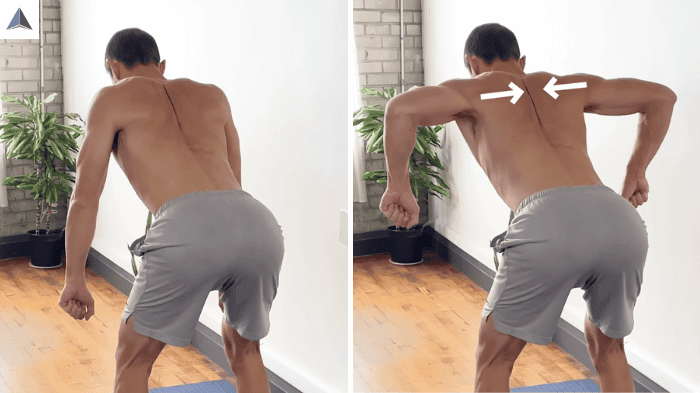
- Stand with knees slightly bent, hinge forward at hips, spine neutral.
- Let arms hang naturally.
- Pinch shoulder blades together before each row.
- Row arms toward chest, holding the squeeze for 5 seconds.
- Slowly lower arms back down.
- Reset posture and repeat for 5 reps.
- Keep chin tucked and shoulders relaxed.
Benefits:
- Strengthens rhomboid muscles to support mid-back stability.
- Improves posture and shoulder blade control.
- Reduces middle back discomfort and prevents tightness from returning.
For those who want to combine strengthening with other mid-back mobility routines, pairing the rhomboid row with SI joint pain exercises can provide a full posterior chain support routine.
How These Exercises Work Together
The combination of active self-myofascial release and strengthening provides both immediate relief and long-term stability. The release reduces sore mid back pain, while the rhomboid row strengthens the muscles that maintain proper posture.
By consistently practicing these movements, you’ll improve tight mid back muscles, enhance upper back posture, and reduce tension that often radiates into the shoulders. For added relief, integrating techniques to release tight shoulders can complement these exercises.
Tips for Maximum Relief
- Focus on deep, relaxed breathing to help muscles release more effectively.
- Avoid placing the ball directly on the shoulder blade or spine.
- Perform exercises consistently, 1–2 times per day for best results.
- Combine these mid back exercises with shoulder and thoracic mobility work to maintain full upper back function.
- Increase intensity gradually by holding the row squeeze longer or adding reps.
With consistent practice, these exercises help prevent recurrence of sore rhomboid muscles and middle back discomfort, keeping your upper back mobile and strong.
Key Takeaways
- Quick relief: Mid back pain exercises reduce soreness and tension in minutes.
- Release + Strengthen: Immediate relief from release and long-term benefits from strengthening.
- Guided instruction: Use the ROM Coach app to follow along with the Rhomboid “Movement Painkiller” and perform each exercise correctly.
- Posture support: Strengthening rhomboids improves shoulder blade control and prevents recurring discomfort.
- Safe and effective: Non-invasive, medication-free approach to tight mid back muscles and sore rhomboid muscles.
Ready to relieve your mid back pain? Download the ROM Coach app and do the Rhomboid “Movement Painkiller” today!