
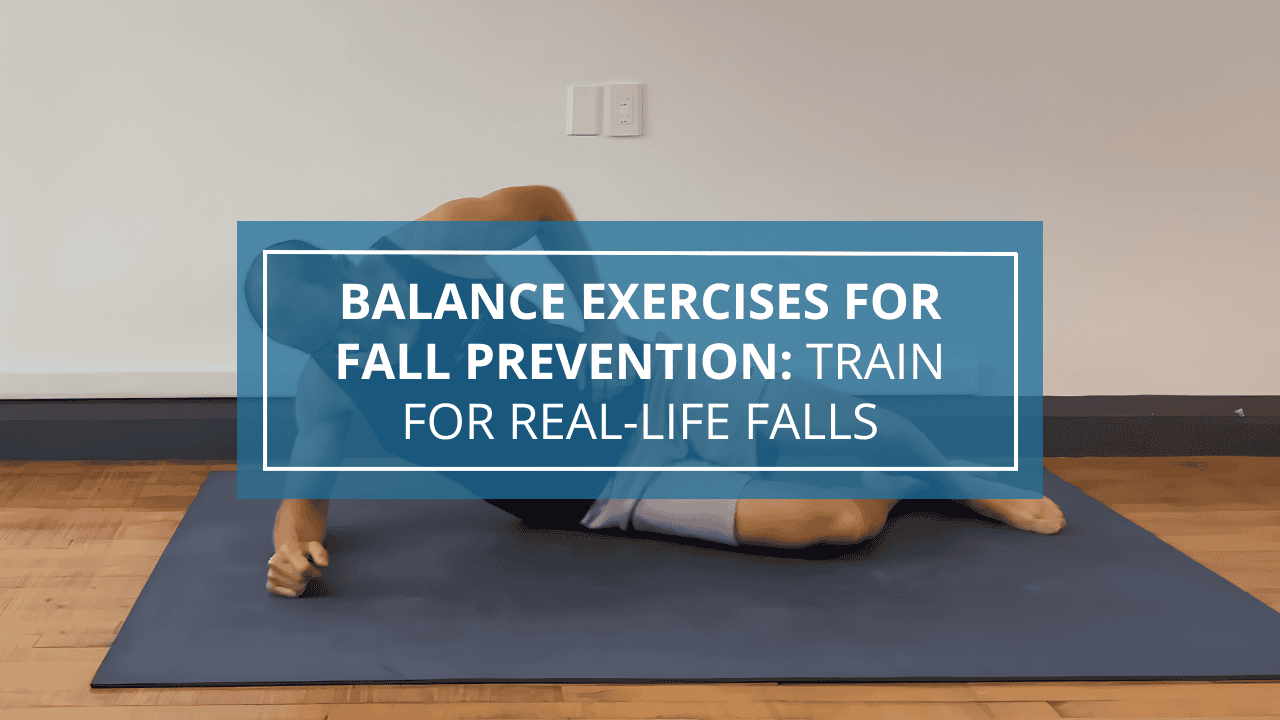
When most people think of balance exercises for fall prevention, they usually think of standing on one leg, balancing on a wobble board, or trying to hold a challenging position without moving.
But that is not the ultimate goal.
The ultimate goal of balance training is to prevent falls in real life.
Most people do not fall because they were standing on one leg and suddenly lost their balance. They fall because something unexpected happens.
Maybe you are walking along a sidewalk and catch your toe on an uneven surface. Maybe you are hiking and your foot catches on an exposed tree root. Maybe you are turning quickly, your foot does not move with you, and your body starts going down.
In these moments, balance is not about staying perfectly still.
Balance is about your ability to react.
Do you have the speed and quickness to throw your foot out in front of you before you fall?
If you do start going down, do you have the coordination to change the position of your body, absorb the force, and minimize the impact?
And if you cannot stop the fall, do you have enough strength and body capacity to reduce the risk of serious injury?
These are the questions I focus on when designing balance training exercises.
That is why I created the Balance 360 program. It focuses on the six elements of functional balance: reaction time, vestibular function, speed and quickness, lower body mobility, coordination, and bone strength and density.
In this article, I’ll walk you through four exercises from the program and explain why they are important for a complete approach to fall prevention.
Why Traditional Balance Exercises Are Not Enough
Traditional balance drills often focus on one specific skill: maintaining your balance in a controlled position.
And while that can be useful, real-life falls usually do not happen in controlled situations.
Falls happen when your body is challenged unexpectedly.
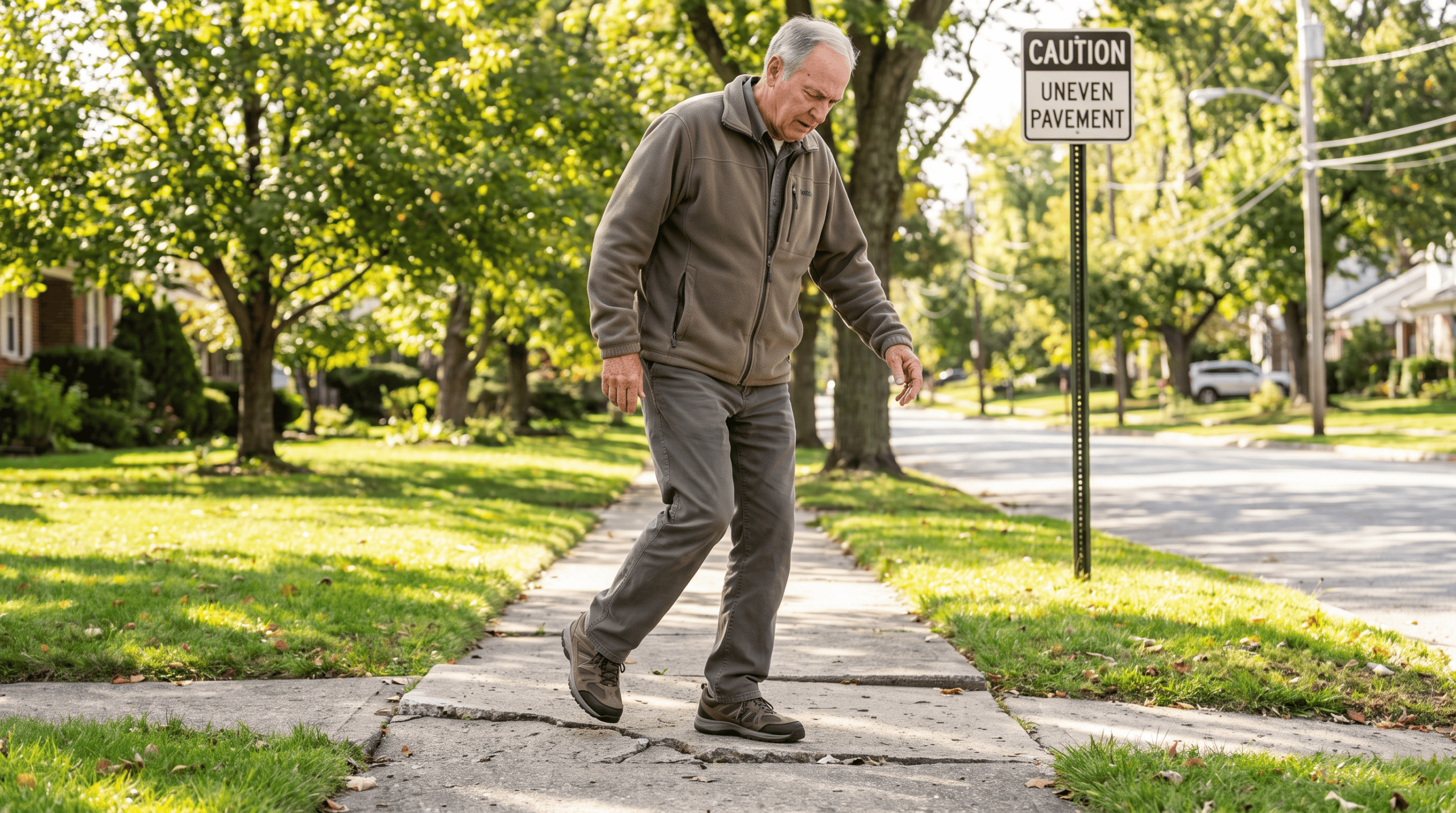
Your foot catches on something. Your direction changes suddenly. Your momentum carries you somewhere you did not expect.
That means effective fall prevention balance exercises for seniors need to train more than just stability.
They need to train your ability to respond.
The takeaway is simple: balance is not one single ability.
It is the combination of multiple systems working together.
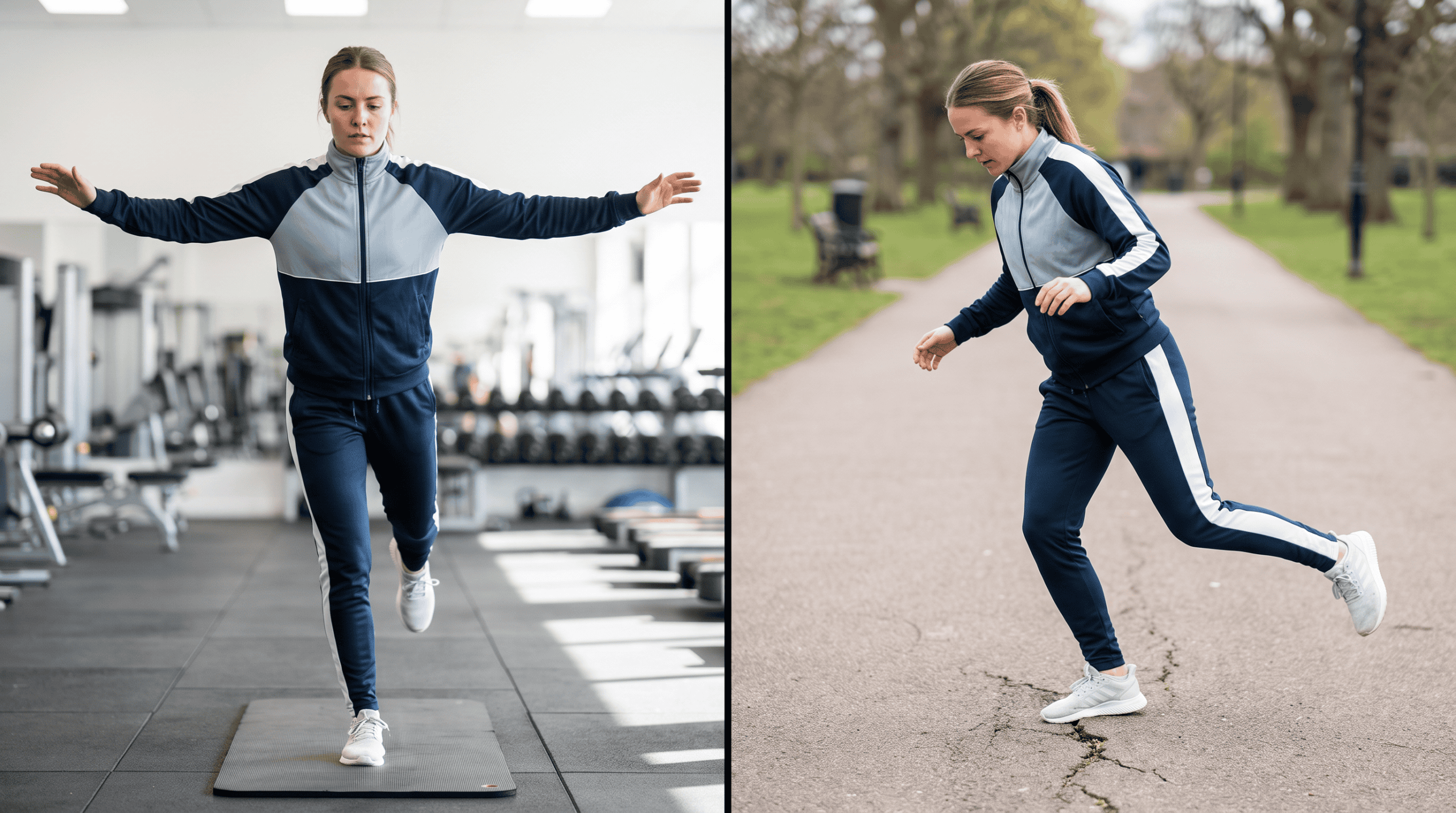
The Six Elements of Functional Balance
When we talk about balance, we often focus only on standing on one leg.
But that is only one piece of the puzzle.
Functional balance includes:
- 1-Leg Balance
- Reaction time
- Vestibular function
- Muscle Contraction Speed
- Lower body mobility
- Bone strength and density
If you train all of these areas, you give your body more tools to handle unexpected situations.
That is what makes these balance exercises for fall prevention different from many traditional balance drills.
The goal is not just to improve your ability to stand still.
The goal is to improve your ability to move, react, and recover.
How to Fix the Root Cause With Functional Balance Training
When you trip, your body has only a brief moment to respond.
Your nervous system has to recognize what happened. Your muscles have to activate quickly. Your body has to coordinate movement to help you recover.
For example, if you catch your toe while walking forward, you need enough hip flexor quickness to get your foot out in front of you.
If you catch your foot while turning, you need your hips and ankles to respond in different directions.
If you begin to fall, you need the ability to adjust your body position and manage the momentum.
That is why a complete approach to balance exercises should train these real-world situations.
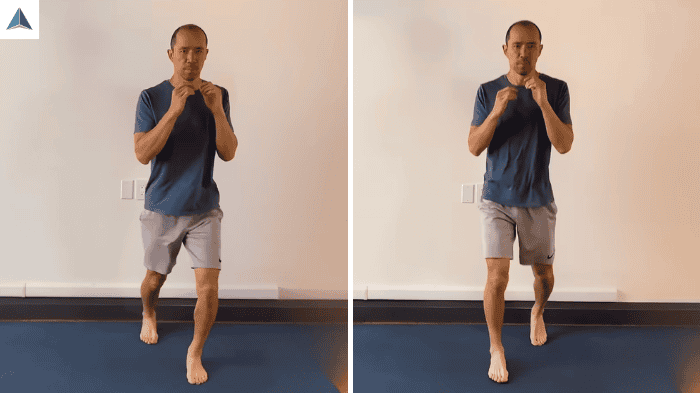
Shuffle Split
When you catch your toe on something like an uneven sidewalk or an exposed tree root, your momentum carries you forward.
If you do not have enough quickness in your hip flexors to throw your foot out in front of you, you may not be able to recover before you fall.
The Shuffle Split trains your hip flexors for quickness so you can get your foot out in front of you fast enough to help catch yourself before going down.
This is an important part of functional balance because recovering from a trip requires speed, not just strength.
Exercise Benefits
- Trains hip flexor quickness needed during a trip recovery.
- Develops the speed component of functional balance.
- Addresses one of the common situations that leads to falls: catching your toe and losing forward balance.
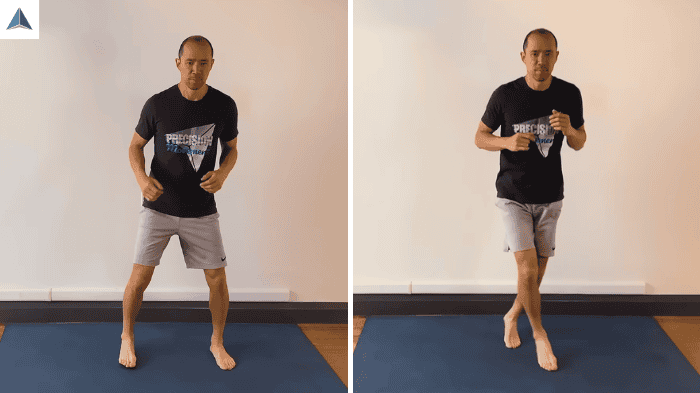
Cross Hop
Sometimes we catch our foot while turning our body.
In those situations, we need more than quick hip flexors. We need quick hip abductors and adductors—the muscles responsible for controlling movement from side to side.
The Cross Hop trains these movements while also strengthening the ankles.
This helps address another common challenge involved in falls: changing direction quickly and controlling your body when your movement is not perfectly predictable.
Exercise Benefits
- Trains hip abductor and adductor movement.
- Improves lateral movement ability.
- Strengthens the ankles.
- Supports coordination during changes in direction.
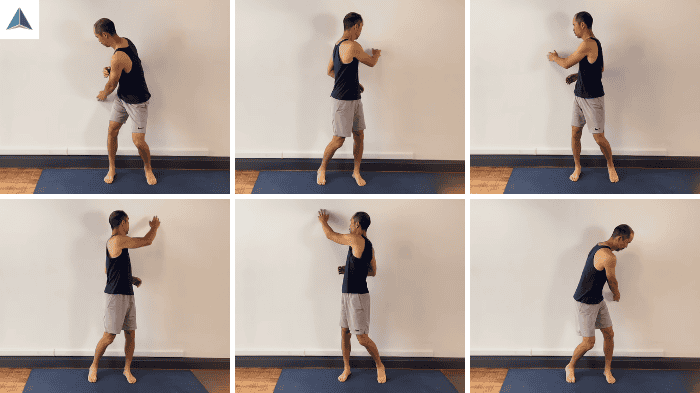
Rotational Wall Touches
When we fall, there is often a split second where we can change the position of our body.
Instead of going straight down and landing heavily on our hands or shoulders, we can learn to rotate and roll with the momentum.
In martial arts, this concept is called a breakfall. Instead of slamming into the ground, the body rolls like a ball and spreads out the impact.
Rotational Wall Touches teach your body to rotate so you can better manage your momentum instead of simply falling straight down.
This exercise also trains your vestibular system, which is one of the six elements of functional balance.
Exercise Benefits
- Trains body rotation during a potential fall.
- Helps develop the ability to manage momentum.
- Trains vestibular function.
- Supports coordination as part of functional balance.
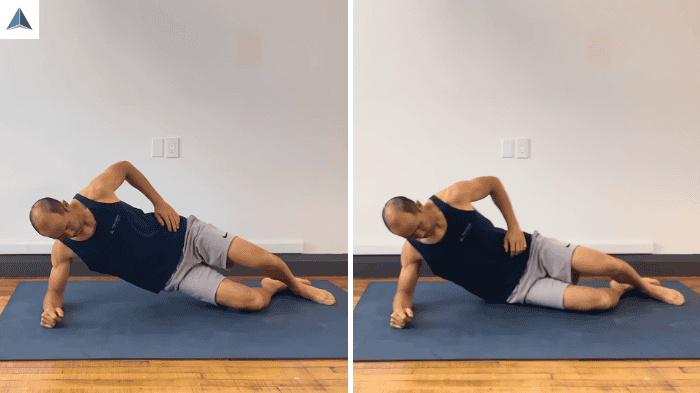
Outer Hip Bump
Hip fractures are the most common fracture from falls in people over 65.
The problem is not only the broken bone itself. The complications that can follow can also be serious, including risks associated with surgery, muscle atrophy, and blood clots from prolonged bed rest.
That is why strengthening the hip area is an important part of preparing your body for falls.
The Outer Hip Bump was created to strengthen your hip area in the way needed to provide additional support if you cannot stop yourself from going down and land hard on your hip.
It is another piece of a complete approach to fall prevention balance exercises for seniors.
Exercise Benefits
- Strengthens the hip area as part of fall preparedness.
- Addresses one of the areas most vulnerable during falls.
- Complements other functional balance training.
- Supports a more complete approach to preparing for falls.
Why These Exercises Actually Work
Your balance system is much more complex than simply standing still.
When you move through the world, your body constantly responds to changes in your environment.
A trip requires quick reaction time.
A change in direction requires coordination.
A potential fall requires your body to manage momentum.
These exercises address those specific demands.
The Shuffle Split focuses on the quickness needed to recover from catching your toe.
The Cross Hop trains the hip and ankle movements needed during changes in direction.
Rotational Wall Touches develop your ability to rotate and manage momentum.
The Outer Hip Bump strengthens an area that is vulnerable during falls.
Together, these exercises target the different elements that make up functional balance.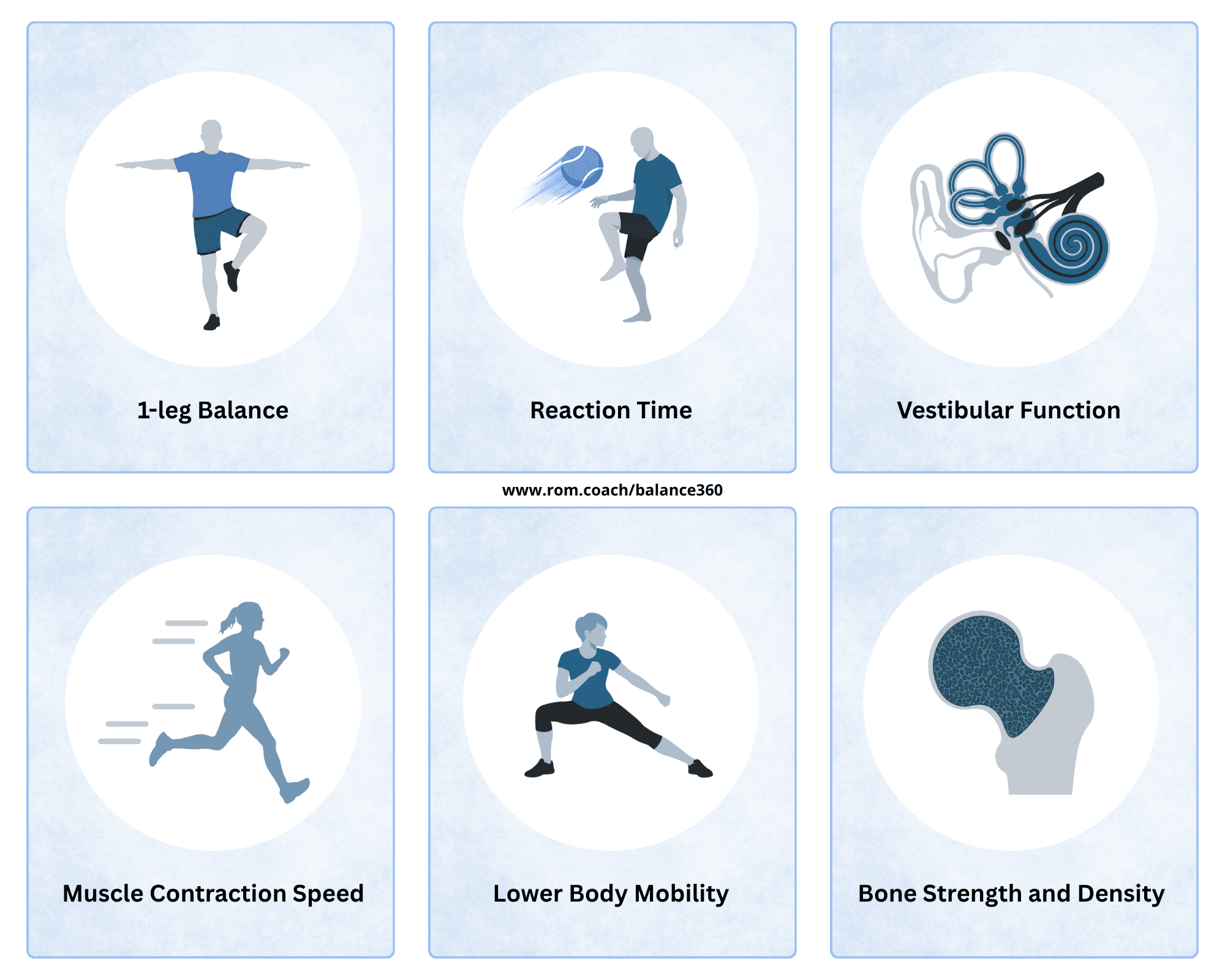
If you want to train all six elements of functional balance, check out the brand new Balance 360 program inside the ROM Coach app.
Key Takeaways
- Balance exercises for fall prevention should prepare you for real-life situations, not just standing still.
- Falls often happen because of trips, changes in direction, and unexpected movements.
- Effective balance training exercises should include reaction time, speed, coordination, mobility, and strength.
- The Shuffle Split trains hip flexor quickness for recovering from trips.
- The Cross Hop trains lateral movement and ankle strength for changing directions.
- Rotational Wall Touches teach your body to rotate and manage momentum during a fall.
- The Outer Hip Bump strengthens the hip area as part of fall preparedness.
- A complete functional balance program goes beyond traditional balance drills.
- Training multiple elements of balance can help you better prepare for the challenges of everyday movement.